Recognizing the Advantages of Lab Grown Diamond Interaction Rings in Today's Market
Lab-grown Diamond interaction rings are becoming significantly prominent in today's market. These options to mined diamonds supply a variety of benefits that attract modern customers. From ecological sustainability to set you back savings, lab-grown rubies provide a compelling choice. Their improved quality and modification choices even more contribute to their appeal. However, the expanding rate of interest questions about the effects of these selections. What factors should couples consider when going with lab-grown over standard rubies?
The Environmental Benefits of Lab-Grown Diamonds
As customers progressively focus on sustainability, lab-grown rubies emerge as an engaging alternative to their extracted equivalents. These synthetic gems are generated in controlled atmospheres, significantly reducing the environmental impact associated with standard Diamond mining. The extraction of natural rubies often results in habitat destruction, dirt disintegration, and water air pollution, devastating local environments. In contrast, lab-grown diamonds require less land and water, reducing source deficiency.
Furthermore, the power used in the creation of lab-grown diamonds can be sourced from renewable resource, further decreasing their ecological influence. This process not only curbs carbon exhausts yet also advertises lasting methods within the precious jewelry market. Consumers that choose for lab-grown rubies contribute to a more ethical and eco-friendly market, straightening their investing in selections with their worths. On the whole, lab-grown rubies provide an option that balances luxury with ecological obligation, attracting a growing demographic worried about sustainability.
Cost-Effectiveness of Lab-Grown Engagement Rings
While numerous pairs seek to stabilize high quality and budget plan when choosing engagement rings, lab-grown diamonds offer an affordable option without endangering on appeal or sturdiness. Generally valued 20-40% less than their all-natural counterparts, lab-grown rubies allow pairs to assign their spending plan much more flexibly, making it possible for bigger carat dimensions or greater high quality stones for the exact same price. This cost does not interfere with the aesthetic charm; lab-grown rubies exhibit the exact same sparkle and clarity as mined rubies, many thanks to identical chemical and physical residential properties. Furthermore, the marketplace for lab-grown diamonds is broadening, leading to competitive prices and raised availability. Pairs can also take pleasure in a bigger range of designs and settings without the financial stress usually connected with standard diamonds. In general, lab-grown interaction rings provide an eye-catching financial choice, making them significantly preferred amongst modern-day couples who prioritize both cost and quality in their investing in decisions.
Ethical Considerations in Choosing Lab-Grown Diamonds

Consumers are progressively worried about the beginnings of their acquisitions, and lab-grown diamonds give a clear supply chain. Each Diamond features qualification outlining its creation procedure, guaranteeing customers can make educated options. Furthermore, the manufacturing of these rubies typically uses eco-friendly power resources, additionally lining up with eco-conscious values. For people focusing on ethical consumption, lab-grown diamonds provide an accountable alternative that merges deluxe with ethical honesty, appealing to modern-day sensibilities in interaction ring selections.
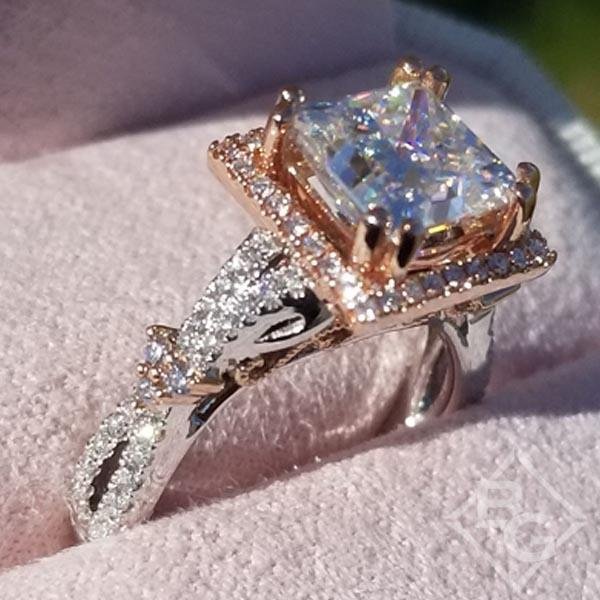
High quality and Charm: Contrasting Lab-Grown and Mined Diamonds
The contrast between lab-grown and extracted diamonds discloses significant differences in visual characteristics and durability. Lab-grown rubies frequently show exceptional quality and color consistency, while mined rubies can present one-of-a-kind additions and variants. Additionally, both kinds share the same solidity, making them equally appropriate for engagement rings.
Aesthetic Characteristics Contrast
Just how do lab-grown diamonds contrast to their extracted counterparts concerning aesthetic qualities? Both types of rubies share identical physical and chemical properties, making it challenging to compare them without specific tools. Lab-grown diamonds typically show less acnes and incorporations, resulting in exceptional quality. Additionally, they can be created in a broader variety of shades, allowing for distinct modification options. While mined diamonds are prized for their natural origin and perceived rarity, lab-grown rubies can achieve equal appeal and luster, often at a lower expense. Inevitably, the selection in between both may come down to personal preference, however additional info aesthetically, lab-grown rubies stand as an engaging choice, flaunting high quality that matches their natural counterparts.
Toughness and Solidity Variables
While both lab-grown and extracted diamonds possess outstanding durability, their hardness remains a specifying particular that emphasizes their viability for day-to-day wear. Rubies are click for more ranked a 10 on the Mohs scale of mineral hardness, making them the hardest natural material known (lab grown diamond engagement rings). This characteristic guarantees that both sorts of rubies withstand scraping and maintain their sparkle with time. Lab-grown rubies, produced under controlled problems, display the same hardness and physical residential properties as their extracted counterparts. Because of this, they supply a appealing and resilient alternative for interaction rings. Consumers can with confidence select either type, recognizing that both give long-lasting quality. Inevitably, the selection in between lab-grown and mined diamonds might boil down to individual worths as opposed to distinctions in longevity or firmness
Customization Options for Lab-Grown Diamonds
Lab-grown rubies provide a variety of modification choices that provide to private choices. From distinct design opportunities to different shade and cut options, these rubies can be tailored to match any kind of personal design. This level of customization assurances that each engagement ring can show the distinctive tastes of the user.
Distinct Layout Opportunities
Numerous style opportunities await those curious about lab-grown Diamond involvement rings, allowing couples to share their unique love stories. With the adaptability of lab-grown diamonds, developers can discover a vast array of styles, from traditional jewelry to detailed vintage settings. Couples can pick from various shapes, such as round, princess, or emerald cuts, each supplying a distinct character. Furthermore, the capacity to select distinct metal types, consisting of white gold, climbed gold, or platinum, further enhances personalization. Lab-grown rubies can also be fairly sourced in numerous carat weight weights, making it possible for couples to discover the best balance between size and budget plan. This convenience permits each ring to mirror the individual preferences and choices of the pair, making it an absolutely individual sign of their commitment.
Customization for each Design
The adaptability of lab-grown rubies expands past one-of-a-kind layout possibilities, providing extensive customization options to match every pair's design. Couples can pick from various setups, steels, and band designs, ensuring that their interaction ring reflects their individuality. Alternatives vary from classic jewelry to modern-day halo layouts, permitting for individual expression in every option. Furthermore, pairs can choose certain functions such as engraving, adding sentimental worth and originality to their rings. The capability to customize warranties that each ring is not just a depiction content of love yet additionally a reflection of personal preference and way of life. This level of personalization makes lab-grown diamonds an appealing selection for those seeking a meaningful and distinct involvement ring.
Color and Cut Choices
Involvement rings featuring lab-grown rubies use a sensational variety of color and cut selections that improve their allure and originality. Unlike standard diamonds, lab-grown choices can be created in a comprehensive variety of tones, including pink, blue, and yellow, permitting pairs to select a distinctively personal touch. These lively shades can act as a meaningful depiction of love and commitment.
Lab-grown diamonds come in different cuts, consisting of oval, princess, and round, each contributing to the stone's luster and visual appeal. This adaptability allows pairs to tailor their rings to reflect their styles and choices. Inevitably, the accessibility of varied shade and cut alternatives makes lab-grown Diamond interaction rings a preferred choice for contemporary couples seeking personalization.
Patterns and Popularity of Lab-Grown Diamonds in 2023
As customers progressively focus on sustainability and ethical considerations in their acquiring choices, the appeal of lab-grown rubies has actually surged in 2023. This year, the market has witnessed a remarkable shift, with more pairs deciding for these rubies as a result of their reduced ecological influence and clear sourcing procedures. Lab-grown diamonds are not only considerably much more affordable than their mined equivalents, yet they also supply a variety of styles and personalization choices that appeal to modern consumers.
Sellers have replied to this growing trend by broadening their collections and highlighting the special qualities of lab-grown rocks, such as their luster and clearness. Social network and influencer endorsements have better enhanced recognition, making lab-grown diamonds a stylish choice for involvement rings. As education and learning concerning the benefits remains to spread, it is expected that the marketplace share of lab-grown diamonds will remain to rise, strengthening their location in the fashion jewelry sector.
Regularly Asked Questions
How Are Lab-Grown Diamonds Developed in a Research laboratory?
Lab-grown diamonds are produced utilizing 2 main approaches: High Stress High Temperature Level (HPHT) simulates all-natural Diamond formation conditions, while Chemical Vapor Deposition (CVD) utilizes gas to speed up carbon onto a substratum, forming diamonds layer by layer.
Do Lab-Grown Rubies Hold Their Value With Time?
Lab-grown diamonds generally do not hold their worth along with natural diamonds. Market changes and consumer assumptions affect resale prices, leading to reduced long-term worth retention for lab-grown alternatives compared to their all-natural equivalents.
Can Lab-Grown Diamonds Be Resized Like Mined Diamonds?
Lab-grown diamonds can be resized likewise to mined diamonds, as they have equivalent physical residential properties. Jewelers commonly use basic methods for resizing, making sure that both kinds of diamonds preserve their integrity and visual allure during the procedure.
Are Lab-Grown Diamonds Available in Numerous Forms and Sizes?
Lab-grown rubies are certainly offered in a selection of sizes and forms. They can be personalized to fulfill private choices, supplying choices like round, princess, oval, and emerald cuts, amongst others, making certain varied options for customers.
How Do I Confirm the Credibility of a Lab-Grown Diamond?
To validate the credibility of a lab-grown Diamond, one must speak with a credible jeweler or get an accreditation from an identified grading laboratory, which generally includes details regarding the Diamond's origin and qualities.
Lab-grown diamonds are created in controlled environments, eliminating the ecological damage frequently linked with standard Diamond mining. lab grown diamond engagement rings. Lab-grown rubies commonly display superior clarity and shade uniformity, while mined diamonds can present unique inclusions and variations. While extracted diamonds are valued for their natural beginning and perceived rarity, lab-grown diamonds can attain equivalent appeal and radiance, frequently at a lower price. Lab-grown rubies typically do not hold their value as well as all-natural rubies. Lab-grown diamonds can be resized in a similar way to extracted rubies, as they have similar physical homes
Comments on “lab grown diamond engagement rings That Look Just Like the Real Thing—Only Better”